Walking is the least glamorous item in this entire library, and possibly one of the most underrated. There's genuine, specific evidence for what it does to blood sugar, sleep, and your stress response in the moments right after conflict, not just "exercise is good for you" in the abstract.
Mental Health & Wellness
The Single Best Thing You Can Do After a Fight With Your Spouse Might Just Be a Walk
No supplements, no equipment, just movement, and the research behind why it works on your blood sugar, your sleep, and your nervous system.
 By Nanda ShannonIHP, MSW Candidate, Gottman Lessons in Love Leader, Mental Health & Relationships Educator
Quick Answers
- What you'll learn:How walking affects blood sugar, sleep, and stress recovery, with real timing specifics
- Who it is for:Anyone looking for a free, accessible tool for blood sugar control, better sleep, or faster stress recovery after conflict
- Research based:Randomized controlled trials on postprandial walking, systematic reviews on exercise/cortisol/sleep, and a randomized crossover trial on acute stress recovery
- Key takeaway:Walking, especially at the right time relative to meals, stress, or bedtime, has specific, evidence-backed effects on glucose control, sleep quality, and cortisol recovery
1. Blood Sugar: Timing Matters More Than You'd Think
This is one of the more actionable, precisely-timed findings in nutrition science. A controlled study found that a 30-minute brisk walk after eating substantially reduced the glucose peak following meals, regardless of whether the meal was higher or lower in carbohydrates, or came from a mixed meal versus a carbohydrate drink.¹ Research specifically comparing exercise timing found that walking immediately after a meal was more effective at blunting blood sugar elevation than walking before the meal or waiting 30 minutes afterward, meaning timing isn't a minor detail, it's the mechanism.²
You don't need a long walk for this to work. Even a 2 to 5 minute walk has been shown to lower blood sugar somewhat, and short 10 to 15 minute walks after meals have been shown to meaningfully reduce post-meal glucose spikes, supporting better long-term blood sugar control over time.¹ The effective window appears to be walking within 60 to 90 minutes of eating, which lines up with the body's natural glucose absorption timeline. This matters beyond diabetes management: large glucose spikes are linked to oxidative stress and endothelial dysfunction even in people without diabetes, so this is relevant to anyone, not just people managing blood sugar conditions.
2. Sleep: The Cortisol Rhythm Connection
A large review of the research found that your stress hormones and your sleep are tangled up with each other, and moving your body regularly can improve both.³ Bad sleep cranks up your stress hormones, and higher stress hormones make it harder to sleep. It's a loop, and exercise seems to help break it. Walking regularly seems to help smooth out that rhythm instead of throwing it off.
Research published in the journal Sleep Health found that people who walked regularly reported improved sleep and fewer nights of tossing and turning compared to people who sat around more.³ Timing still matters here too: a morning walk seems to help reset your internal clock and boost melatonin later that night, while a light evening walk is more about winding down before bed, just don't do anything too intense right before bed, it raises your body temperature at the exact moment it's supposed to be cooling down for sleep.
3. Nervous System Regulation: What Actually Happens After a Stressful Moment
This is the part most relevant to the "walk it off after a fight" instinct, and there's real evidence behind it, though it's worth being precise about which evidence is solid and which is more speculative.
The solid evidence: a randomized crossover trial directly tested the acute stress-relieving effect of walking, comparing outdoor hiking, indoor treadmill walking, and simply sitting. Salivary cortisol decreased in all three conditions, but decreased significantly more after both walking conditions than after sitting still, with no meaningful difference between walking outdoors versus on a treadmill.⁵ In plain terms: it's the walking itself doing the work, not necessarily being outdoors. Moving brings your stress hormones down faster than just sitting there and waiting to feel better.
Separate research found a meaningful interaction between prior-day exercise and sleep quality on next-day cortisol rhythm: on days following more exercise and better sleep, the body's diurnal cortisol decline was steeper than usual, meaning exercise and good sleep seem to reinforce each other rather than working in isolation.⁴
Worth a caveat: you'll often see walking described as a form of "bilateral stimulation," the same rhythmic, alternating left-right pattern used in EMDR therapy for trauma processing, with claims that this specifically helps the brain process emotional distress. It's a popular idea, and it's plausible, but the specific claim that this is why walking calms you down mostly comes from clinical commentary and wellness writing, not rigorous studies on walking itself. The simpler, better-supported explanation: walking lowers cortisol and shifts your body out of fight-or-flight mode and into rest-and-recover mode. That's well documented on its own, no extra theory required.
4. Putting It Together: The Post-Argument Walk
After a stressful moment, like a difficult conversation with a spouse, a short walk does double duty: it's one of the few interventions shown to measurably lower cortisol faster than simply sitting with the stress, and if the timing lines up with a meal, it also blunts the blood sugar spike that stress hormones themselves can worsen. Given everything else on this site about how chronic conflict and stress hormones wear down your heart and immune system over time, a walk isn't just a distraction, it's a real reset for your body, backed by evidence.
What most articles won't tell you
Walking, especially at the right time relative to meals, stress, or bedtime, has specific, evidence-backed effects on glucose control, sleep quality, and cortisol recovery
Related Articles
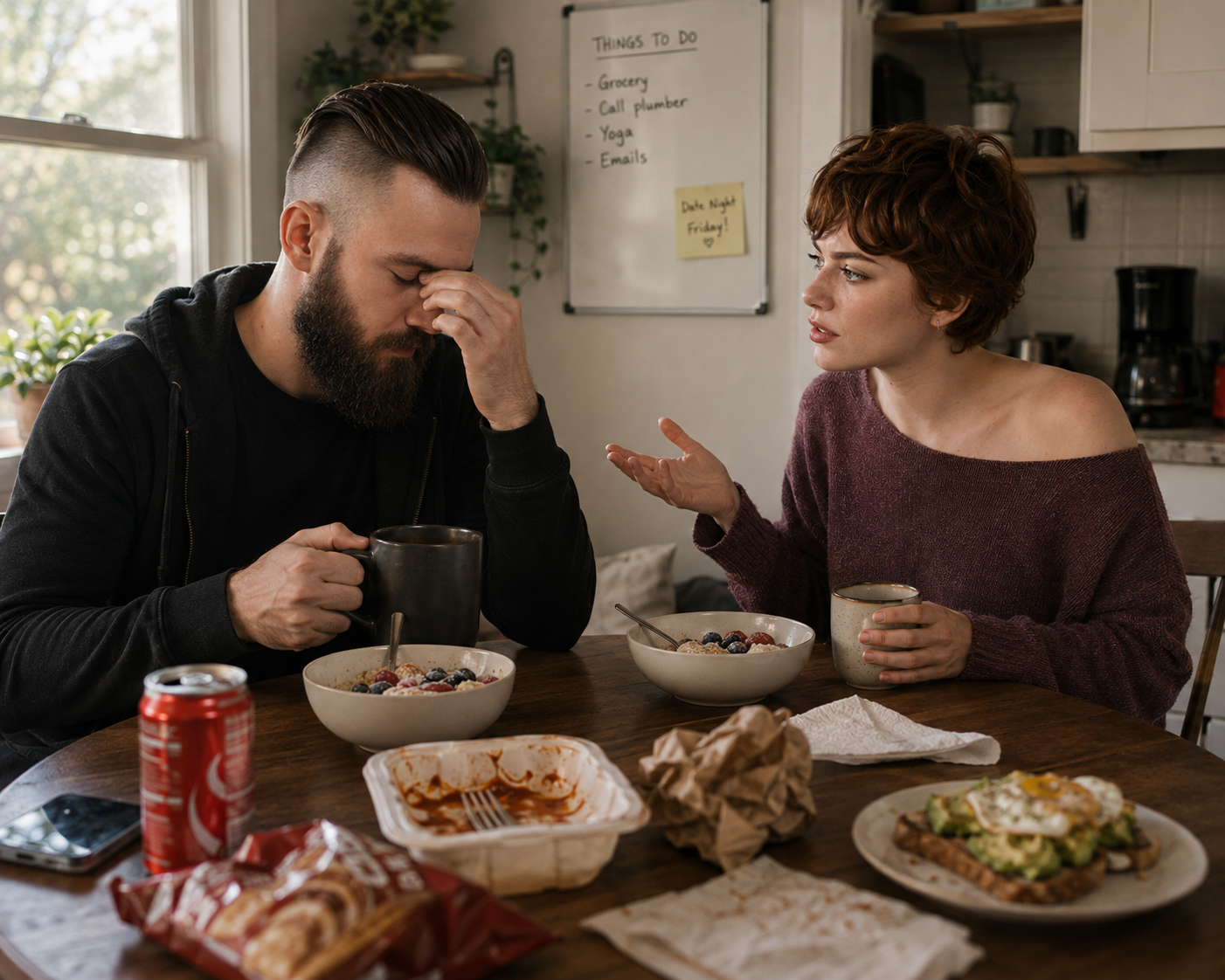
How What You Eat, Drink, and Sleep Might Be Sabotaging Your Relationships
You already know food affects your body. It also affects your mood, and your mood walks straight into your relationships.
Read more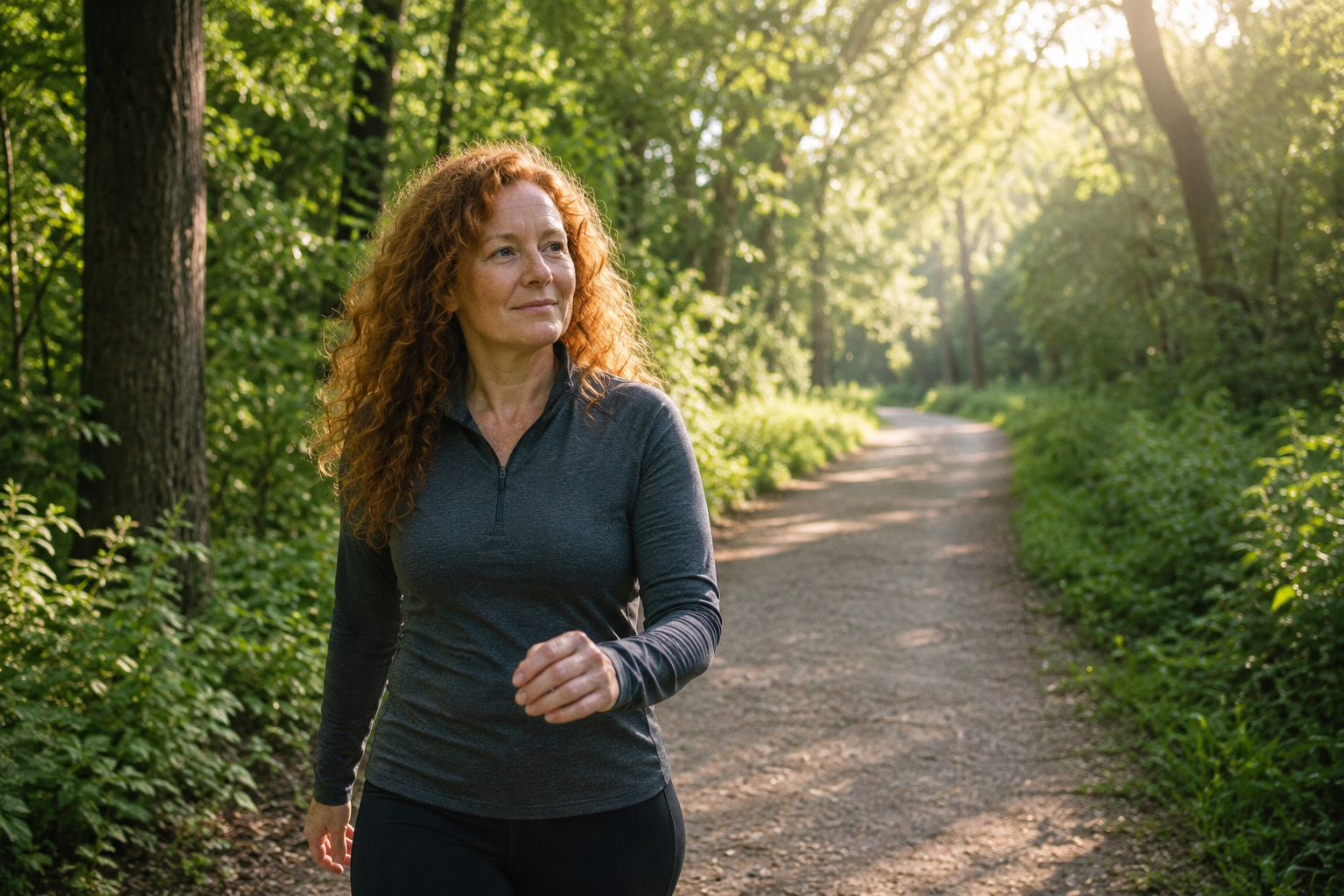
The Free Antidepressant You're Not Using Enough
The evidence for movement as a treatment for depression and anxiety is stronger than most people realize, and stronger than for many nutrition interventions.
Read more
Is Your Gut Secretly Running Your Brain?
Depression, anxiety, and poor sleep all show up in gut bacteria research. Here's the actual mechanism, not just the buzzword.
Read more
Why Sunlight Feels So Good and Your Phone Feels So Bad at Night
The same biological system that makes morning sunlight lift your mood is what makes your phone at 11pm quietly wreck your sleep.
Read more