Light isn't just something you see by. It's a direct biological signal that shapes mood, alertness, and sleep, and the type, timing, and intensity of light you're exposed to changes which direction that signal pushes you.
Mental Health & Wellness
Why Sunlight Feels So Good and Your Phone Feels So Bad at Night
The same biological system that makes morning sunlight lift your mood is what makes your phone at 11pm quietly wreck your sleep.
 By Nanda ShannonIHP, MSW Candidate, Gottman Lessons in Love Leader, Mental Health & Relationships Educator
Quick Answers
- What you'll learn:How sunlight supports mood and how evening artificial light disrupts sleep, and why timing matters more than most people realize
- Who it is for:Anyone whose mood shifts seasonally, or whose screen habits might be affecting their sleep
- Research based:Large cohort studies, clinical light therapy trials, and randomized controlled trials on blue light and sleep
- Key takeaway:Consistent daytime sunlight supports mood and healthy circadian rhythm; evening blue light from screens suppresses melatonin and delays sleep, regardless of exposure duration
1. Sunlight and Mood
Sunlight plays a critical role in regulating mood by helping the brain produce serotonin, a neurotransmitter linked to wellbeing, and by influencing melatonin production, which supports healthy sleep cycles and helps synchronize the body's circadian rhythm.¹
This isn't a small or fringe finding. A large study of more than 85,000 individuals found that daytime sunlight exposure has measurable positive effects on mental health, reducing symptoms of depression and anxiety, while darkness exposure specifically between 10pm and 4am independently supported mental health as well, with particular benefit for depression.¹ On a mechanistic level, exposure to sunlight increases dopamine production in the brain, a neurotransmitter involved in attention, learning, and motivation, in addition to serotonin's role.¹
Light therapy, deliberately using bright artificial light to mimic sunlight, has become a legitimately established clinical treatment, not just a lifestyle tip. Light therapy has been studied since the early 1980s, and a landmark meta-analysis of the accumulated randomized controlled trials found its effect on seasonal depression was comparable in size to standard antidepressant medication, working partly by regulating circadian rhythm and partly by stimulating serotonin, dopamine, and melatonin production.² A 2024 meta-analysis pooling over a dozen randomized trials found light therapy also meaningfully helps non-seasonal depression, particularly when combined with an antidepressant, and shows promise for perinatal depression and premenstrual dysphoric disorder as well.³
2. The Nuance: More Isn't Always Simply Better
Unlike some of the more straightforward findings on this site, sunlight's relationship with mood has a genuine wrinkle worth knowing. One study found that cumulative sunlight exposure over 14 to 60 days was associated with lower suicide rates, while short-term exposure of around 10 days was actually associated with higher suicide rates, suggesting sustained, long-term light exposure and brief, short-term spikes may affect mood through different mechanisms.⁴ Similarly, a study found that long-term (30-day) sunlight exposure benefited people with major depressive disorder, while short-term exposure sometimes had a negative effect on mood, possibly because it disrupted sleep-wake cycles rather than stabilizing them.⁴
The practical read: consistent, regular sunlight exposure over time is the pattern linked to benefit, not an occasional sunny day after a stretch of gray ones. Research using objective sleep tracking found that greater bright light exposure was linked to lower depression symptoms partly because it supported more regular sleep timing, meaning sunlight's mood benefit runs partly through its effect on keeping your sleep schedule consistent, not sunlight alone.⁵
3. Artificial Light and Sleep: The Blue Light Problem
The same system that makes morning sunlight helpful makes evening screen light a problem. Blue light, in the 460-480 nanometer range typical of phone and computer screens, is the primary stimulus for specific light-sensitive cells in the retina that signal the brain's master circadian clock, the suprachiasmatic nucleus, to suppress melatonin production. Since melatonin normally rises in the evening to facilitate sleep, this suppression delays the body's internal clock and prolongs the time it takes to fall asleep.
Experimental studies show that even short periods of evening tablet or smartphone use significantly reduce melatonin and shift its onset later, resulting in later bedtimes and shorter sleep duration.⁶ Chronic exposure to blue light after dusk can cumulatively contribute to insufficient, irregular sleep, with downstream effects on cognition, mood, and metabolic health. A study out of the University of Haifa specifically compared screens emitting blue light versus red light, finding that blue light damaged sleep duration and quality, while red light exposure produced sleep similar to normal, unexposed sleep.⁶
A practical caveat worth naming: blue-light blocking glasses are a popular proposed fix, but the evidence for them is mixed. A systematic review and meta-analysis of randomized controlled trials found the evidence for blue-light blocking glasses remains inconsistent, largely due to small sample sizes and inconsistent study protocols, and effectiveness appears to depend heavily on the specific filtering strength of the glasses used, with only strong filters showing a meaningful reduction in melanopic (circadian-affecting) light input.⁷ In other words, cheap blue-light glasses may do less than advertised; reducing screen time before bed or dimming and warming your lighting remains the more reliably supported approach.
What most articles won't tell you
Consistent daytime sunlight supports mood and healthy circadian rhythm; evening blue light from screens suppresses melatonin and delays sleep, regardless of exposure duration
Related Articles

Is Your Gut Secretly Running Your Brain?
Depression, anxiety, and poor sleep all show up in gut bacteria research. Here's the actual mechanism, not just the buzzword.
Read more
The Single Best Thing You Can Do After a Fight With Your Spouse Might Just Be a Walk
No supplements, no equipment, just movement, and the research behind why it works on your blood sugar, your sleep, and your nervous system.
Read more
How What You Eat, Drink, and Sleep Might Be Sabotaging Your Relationships
You already know food affects your body. It also affects your mood, and your mood walks straight into your relationships.
Read more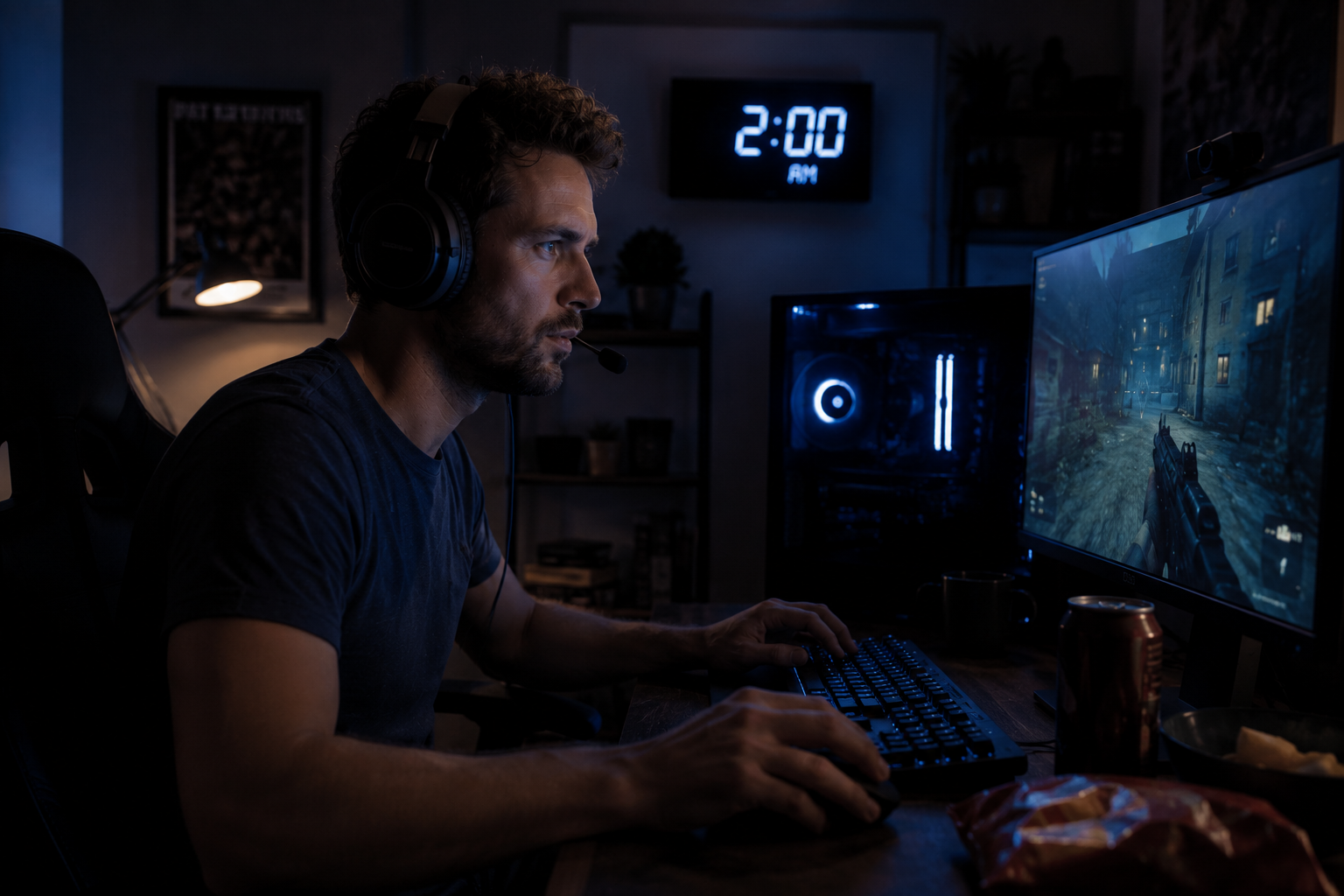
Your Body Has a Clock, and Ignoring It Is Costing You
Circadian rhythm isn't just about sleep. It governs mood, metabolism, and even when you should eat.
Read more