Most relationship advice starts at the conversation: what you said, how you said it, whether you listened. That matters. But a lot of the friction in relationships starts somewhere much less obvious, in your blood sugar, your last workout, and how you slept the night before. Your body sets the baseline mood you bring to every interaction, and when that baseline is off, the people closest to you feel it first.
Mental Health & Wellness
How What You Eat, Drink, and Sleep Might Be Sabotaging Your Relationships
You already know food affects your body. It also affects your mood, and your mood walks straight into your relationships.
 By Nanda ShannonIHP, MSW Candidate, Gottman Lessons in Love Leader, Mental Health & Relationships Educator
Quick Answers
- What you'll learn:How food, exercise, and sleep shape your mood, and how that mood shapes your relationships
- Who it is for:Anyone who keeps having small fights that seem to come out of nowhere
- Key takeaway:The physical basics set the baseline mood you bring to every interaction; steady blood sugar, regular movement, and good sleep give you a longer fuse for the people who matter most
The "Hangry" Effect Is Real, and It Has Your Partner's Name on It
There is a genuinely striking piece of research on this. Married couples were tracked for three weeks, and each evening they privately recorded how angry they felt toward their spouse. The lower a person's blood sugar was that evening, the angrier they were, and the more aggressively they acted toward their partner in a follow-up task. This held up even after accounting for how happy the couples were in their relationships to begin with.¹
In other words, it was not that unhappy people had worse blood sugar. Low blood sugar itself predicted the irritability, regardless of how good the relationship was.¹
Here is why this matters for what you eat. Refined carbohydrates and sugary foods spike your blood sugar fast and then drop it just as fast. That crash is exactly the low-blood-sugar state linked to shorter tempers and less patience. So the afternoon that starts with a pastry and a sweet coffee can end with you snapping at someone you love over something small, and it can genuinely feel like they caused it, when a good part of the fuse was lit by what you ate.
Self-control takes energy, and your brain runs that energy on steady blood sugar. When the fuel runs low, the patience goes first, and the person in the room with you takes the hit.
The practical read is not "never eat sugar." It is that steadier blood sugar, from meals built on protein, fiber, and whole foods rather than quick refined carbs, gives you a longer fuse for the people who matter most. If you want the deeper mechanics, our articles on sugar and anxiety and on simple versus complex carbs go further.
Exercise: The Cheapest Mood Improvement You Can Give Your Relationship
Exercise is one of the most reliable mood boosters there is. Moving your body, even a brisk walk, lifts mood, lowers stress, and takes the edge off anxiety, and it does this fairly quickly rather than only over months.
The relationship angle is simple once you connect the dots. You do not bring your workout to your partner. You bring the mood your workout left you in. Someone who has taken the edge off their stress is more patient, more present, and slower to snap than the same person carrying a full day of tension into the room. The exercise is for you. The calmer, warmer version of you is what your relationship gets. If you want the full picture on why movement works this well for mental health, our article on exercise and mood covers it.
Sleep: The One That Quietly Wrecks the Most Conversations
If there is a single physical factor that does the most damage to relationships, it may be poor sleep, and the research on this is direct.
When couples sleep badly, they fight more the next day.² Worse, poorly slept people become less able to read their partner's emotions accurately, which is the exact skill a hard conversation depends on. And it is contagious: even if you slept fine, your partner's bad night can drag the whole day's mood down for both of you.² Poor sleep also makes people more selfish and less grateful toward their partner, more focused on their own needs and less able to notice everything the other person is doing right.²
Stack those up and you get the anatomy of a pointless fight: two people who are more irritable, worse at reading each other, and less generous than they would be on a good night's sleep. Often the problem was never the topic. It was the sleep debt both people brought to it.
Sleep does more than protect your mood, too. Running short on it wears down your immune system: a controlled study that exposed volunteers to a cold virus found short sleepers were roughly four and a half times more likely to actually get sick than people sleeping over seven hours a night⁹, and being run-down and unwell is not exactly a recipe for patience and warmth either.
The Nightcap Problem: Alcohol and the Fight You Have Tomorrow
Here is one almost nobody connects to their relationship. That glass or two of wine in the evening can leave you shorter and more irritable with your partner the next day, even when you wake up feeling completely fine, with no hangover and nothing you would consciously notice.
The reason runs straight through the sleep section above. Alcohol is very good at knocking you out, but it specifically robs you of REM sleep, the exact stage your brain uses to process emotion and reset your mood.⁷ This is not only a heavy-drinking problem. The effect starts showing up at around one to two drinks and grows from there, and it holds even for people who fall asleep easily and feel rested in the morning.⁷ You can genuinely believe you slept fine and still wake up running on emotionally shortchanged sleep.
Now connect that to what poor sleep does to couples: more conflict, less patience, and a reduced ability to read your partner accurately. A couple of drinks the night before can quietly load all of those into your morning without leaving any obvious trace you would blame. It does not feel like "I drank last night." It just feels like your partner is being annoying today.
This is not an argument that you can never have a drink. It is worth knowing, though, that the effect on your mood and your patience is real even at modest amounts, and even when you feel fine, so if you have been having more edgy mornings than usual, the wind-down drink is worth a look. We will go deeper on alcohol's effects on your health, your mental health, and your relationships in separate articles.
The Immune Angle, and Why Food Variety Belongs Here
There is one more quiet link worth knowing. A big part of your immune system lives in your gut, and your gut runs on variety. People who eat a wide range of different plants each week, many kinds of vegetables, fruits, beans, nuts, whole grains, tend to have a more diverse and resilient gut, which supports a stronger immune system.⁵ A narrow, repetitive diet supports a narrower one.
Why does this land in an article about relationships? Because it closes the loop. A monotonous diet of mostly refined, ultra-processed food gives you both the blood-sugar swings that shorten your temper and a less resilient system that leaves you more run-down and more often sick. A varied, whole-food diet does the opposite: steadier mood, steadier energy, fewer sick days spent depleted and short with the people around you. None of it is about willpower or being a better partner through sheer effort. It is about not handing yourself an unnecessary handicap before the conversation even starts.
The Bottom Line
You cannot out-communicate a body that is running on no sleep, crashing blood sugar, and no movement. These physical basics set the mood you walk into the room with, and your relationships live or die in the small daily moments that mood governs. Taking care of the basics is not separate from taking care of your relationship. It is part of it.
What most articles won't tell you
You cannot out-communicate a body that is running on no sleep, crashing blood sugar, and no movement. These physical basics set the mood you walk into the room with, and your relationships live or die in the small daily moments that mood governs. Taking care of the basics is not separate from taking care of your relationship. It is part of it.
Related Articles

The Single Best Thing You Can Do After a Fight With Your Spouse Might Just Be a Walk
No supplements, no equipment, just movement, and the research behind why it works on your blood sugar, your sleep, and your nervous system.
Read more
Fearful-Avoidant Attachment: Wanting Closeness and Fearing It at the Same Time
The most internally contradictory of the four styles, and the one most connected to early trauma. Here's what it is and what actually helps.
Read more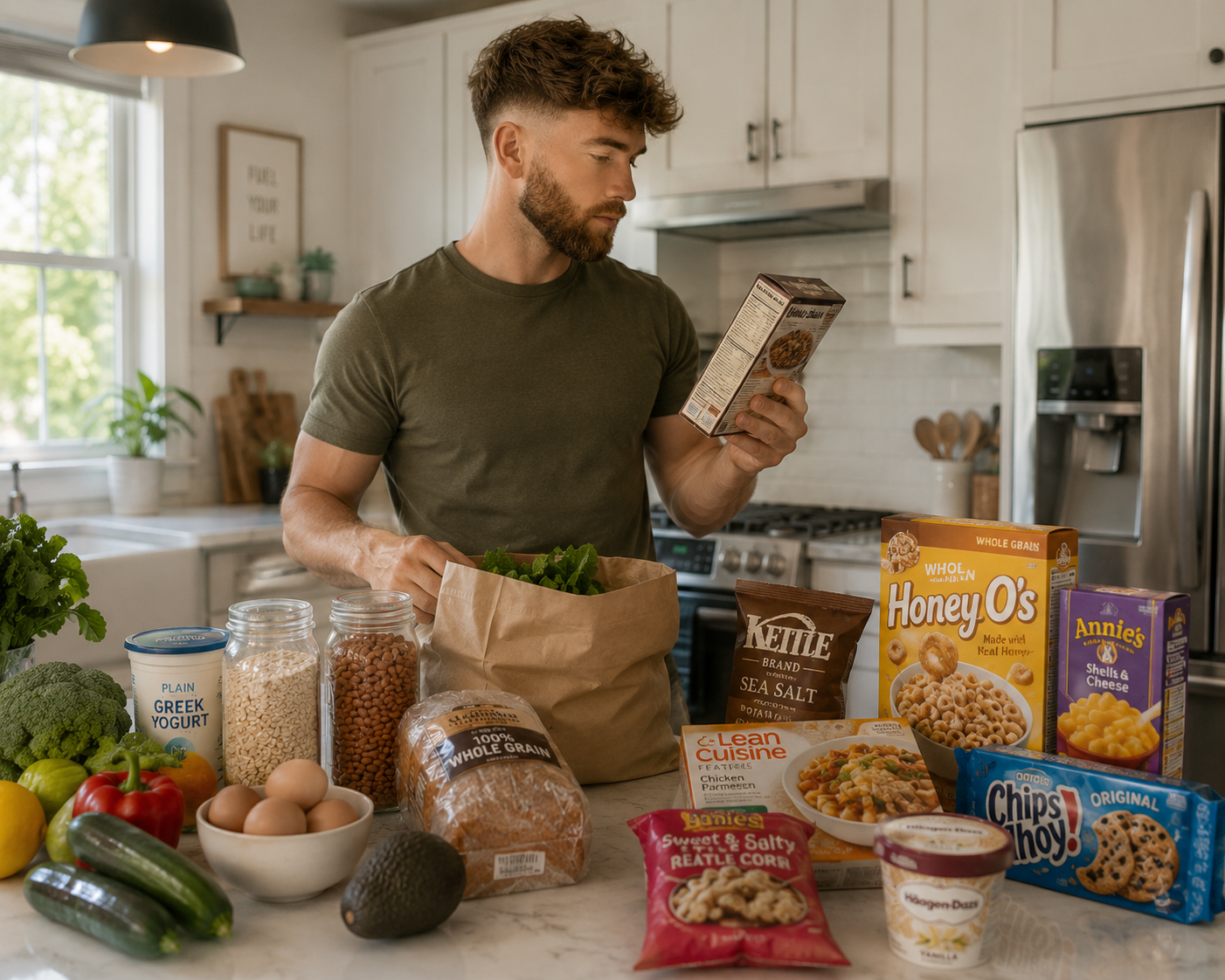
Whole, Processed, Ultra-Processed: What the Labels Actually Mean for Your Brain
Almost all food is processed to some degree. Here's the line that actually matters, and which side of it your mood is on.
Read more
How to Actually Build a New Habit (According to the Research, Not the Internet)
Forget 21 days. Here's what the actual studies show about starting small, making it easy, and what to do when you inevitably miss a day.
Read more