"Processed food is bad for you" is one of those phrases everyone repeats and nobody defines. Frozen peas are processed. So is a Twinkie. Lumping them together isn't useful, and it leaves you with advice you can't actually act on.
Mental Health & Wellness
Whole, Processed, Ultra-Processed: What the Labels Actually Mean for Your Brain
Almost all food is processed to some degree. Here's the line that actually matters, and which side of it your mood is on.
 By Nanda ShannonIHP, MSW Candidate, Gottman Lessons in Love Leader, Mental Health & Relationships Educator
Quick Answers
- What you'll learn:What "processed" actually means, and which foods genuinely affect your mood
- Who it is for:Anyone confused about which processed foods matter
- Key takeaway:Ultra-processed food is linked to about 50% higher odds of anxiety and depression, and it drives overeating even when the nutrition matches
There's a real line here. Once you know where it is, everything gets simpler.
The Four Categories
Whole or minimally processed. Food close to how it comes out of the ground or off the animal. Fresh fruit and vegetables, plain meat, fish, eggs, milk, beans, plain rice and oats, nuts. "Minimally processed" means washing, freezing, drying, grinding, steps that don't add anything. Frozen broccoli counts. So do rolled oats.
Cooking ingredients. Things you cook with rather than eat alone: oil, butter, sugar, salt, vinegar.
Processed foods. Whole foods with cooking ingredients added, usually to preserve them or make them taste better. Canned beans, canned fish, cheese, fresh bread, salted nuts. Short ingredient list, everything recognizable, and you could roughly make it at home.
Ultra-processed foods. Industrial formulas, usually five or more ingredients, built around things you'd never have in your kitchen: high-fructose corn syrup, hydrogenated oils, protein isolates, modified starches, artificial colors, flavors, emulsifiers, and artificial sweeteners. Actual whole food is barely in there.
Soft drinks, packaged snacks, most supermarket bread and pastries, instant noodles, frozen pizza, flavored yogurt, chicken nuggets, most "diet" products.
The shortcut: turn the package over. If you're reading ingredients you wouldn't keep in your own cupboard, you're in the last group.
The Only Line That Matters
Forget "processed versus unprocessed." Canned beans and a frozen pizza are not the same problem, and treating them as one makes eating well feel harder and more expensive than it is.
The line that matters is that last group versus everything else.
What This Does to Your Mood
If ultra-processed food makes up a large share of what you eat, you're meaningfully more likely to be dealing with anxiety or depression, on the order of 50% more likely.¹
That's not a fringe claim or a single surprising study. It's one of the more solidly established findings in nutrition research, showing up consistently across separate research groups in the US, France, Spain, and Australia, in studies following millions of people over years. When scientists graded how trustworthy all that evidence was, anxiety and depression landed in the top tier.¹
One detail is worth knowing because it's specific enough to act on: when researchers looked at which ultra-processed foods carried the strongest link to depression, artificially sweetened drinks and artificial sweeteners stood out above the rest.² Diet soda is not the harmless swap it's marketed as.
It Also Changes How Much You Eat, Not Just What
Here's the finding that surprised researchers most.
Take two groups of people. Feed one an ultra-processed diet, feed the other a whole-food diet. Match the two diets exactly for calories, sugar, fat, salt, and fiber, so on paper they're identical. Then let everyone eat as much or as little as they want.
The ultra-processed group ate about 500 extra calories a day and gained weight. The whole-food group lost weight. Same nutrients on the label, completely different outcome.³
What that tells you is that ultra-processed food isn't just nutritionally weaker. Something about how it's built, softer, faster to eat, engineered to keep you going, gets past the signals that normally tell you you've had enough. If you've ever finished a bag of something and genuinely not noticed, that's not a willpower failure. It's the food working as designed.
What We Still Don't Know
Two honest gaps, worth knowing so you can read future headlines well.
Which came first. Depression drains the energy to shop and cook, so it's possible some people shift toward convenience food because they're already struggling, rather than the other way around. The strongest studies started with people who weren't depressed and followed them forward, which helps a lot, but it doesn't completely settle it.
Why it happens. Blood sugar swings, effects on gut bacteria, inflammation, and simply crowding out the fiber and omega-3s your brain needs are all live possibilities. We know the link is there. We don't yet know which piece is doing the most work.
What To Actually Do
You don't need to fear the word "processed." Canned beans, frozen vegetables, plain yogurt, and real bread are fine.
Aim at the last group only. And if you change one thing, make it artificially sweetened drinks, because that's where the research points most directly.
One swap at a time, held long enough to stick, will get you further than emptying your whole pantry on a Sunday and giving up by Thursday.
For the mechanisms, see our pieces on sugar and anxiety, fiber and mood, and the gut-brain connection.
What most articles won't tell you
Ultra-processed food is linked to about 50% higher odds of anxiety and depression, and it drives overeating even when the nutrition matches
Related Articles
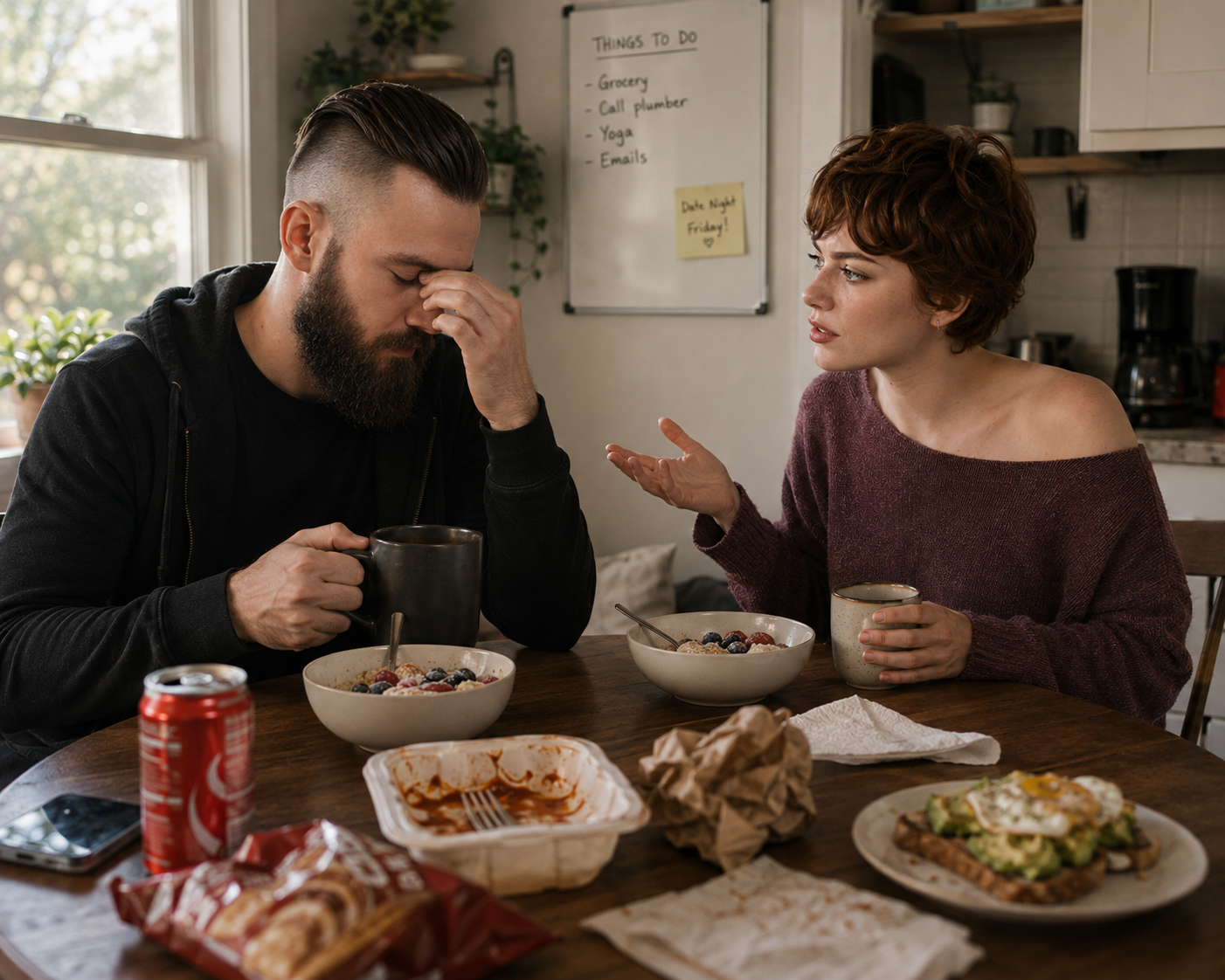
How What You Eat, Drink, and Sleep Might Be Sabotaging Your Relationships
You already know food affects your body. It also affects your mood, and your mood walks straight into your relationships.
Read more
How to Actually Build a New Habit (According to the Research, Not the Internet)
Forget 21 days. Here's what the actual studies show about starting small, making it easy, and what to do when you inevitably miss a day.
Read more
Not All Carbs Are Created Equal, Your Mood Knows the Difference
Not all carbohydrates are equal for mental health, and the difference comes down to how fast they hit your bloodstream.
Read more
Skipping Protein? Your Brain Is Paying for It
Serotonin and dopamine aren't made from nothing. They're built from the protein you eat.
Read more